Mold Inspection & Testing Services in Kinnelon
Request an estimate today
Searching for mold inspection near me can feel like a maze. Dukehip Mold Help is a referral service, so we do not test or clean anything ourselves. We connect you with independent providers in our network who check homes in Kinnelon and the Kinnelon area.
An inspection looks for the mold you can see and the moisture feeding it. Many providers also take air or surface samples and send them to a lab. You get a clear picture, not a guess. That helps you decide what to wipe, what to dry and where to stop and bring in a pro. Request an estimate to get started.
Think You Have Mold? Start Here
Start with your eyes and nose. Look for fuzzy spots, dark stains and peeling paint. Sniff for a damp, earthy smell. Check corners, closets and the wall behind the washer.
A small patch on a hard surface, like a tile or a painted shelf, is often a simple wipe-down job. Wear gloves and a mask. Then ask why it grew there.
Dry It First, Then Look Closer
Mold needs moisture. No moisture, no growth. So fix the moisture before you scrub anything.
Run a dehumidifier. Open a window if the air outside is dry. Fix drips under sinks. Clear gutters so water moves away from the walls. If the spot comes back in a week, the water source is still there. That is a good time for an inspection.
Know Where to Stop
DIY has limits. Stop and call in a provider if the patch is bigger than a few feet, if it sits inside a wall, or if it came back after cleaning. Stop too if anyone at home has asthma, allergies or a weak immune system.
Do not sand, blast with a fan or spray bleach around. That can spread spores to clean rooms.
Why Fall Is a Smart Time to Check
Fall is your last easy window before the heat goes on and the windows shut. Leaves clog gutters. Wet basements stay damp. Closed-up homes trap humid air.
A check now lets you fix leaks and drainage before winter. Snow piles against the foundation and then melts into it.
Spring Snowmelt and Basement Checks
When the snow melts, water pushes at foundation walls. Freeze-thaw cycles open small cracks in block and stone. Water seeps in, and mold follows.
After the thaw, walk your basement with a flashlight. Check the base of walls, stored boxes and the rim joist. Feel for cold, damp spots. Coastal storms add wind-driven rain that finds weak spots too.
Older Homes Need a Closer Look
Older houses have charm and quirks. Stone and block foundations let in moisture. Full basements stay cool and damp. Cape Cod style homes have tight attic eaves that hold humid air. Multi-family buildings can pass moisture between units.
A provider knows where these homes tend to hide trouble. They check spots you may not think to open.
When an Inspection Makes Sense
Book one if you:
- Smell mold but cannot find it
- Had a leak, flood or roof damage
- Are buying or selling a home
- Feel better when you leave the house
- Cleaned a spot and it came back
What Happens During a Mold Inspection
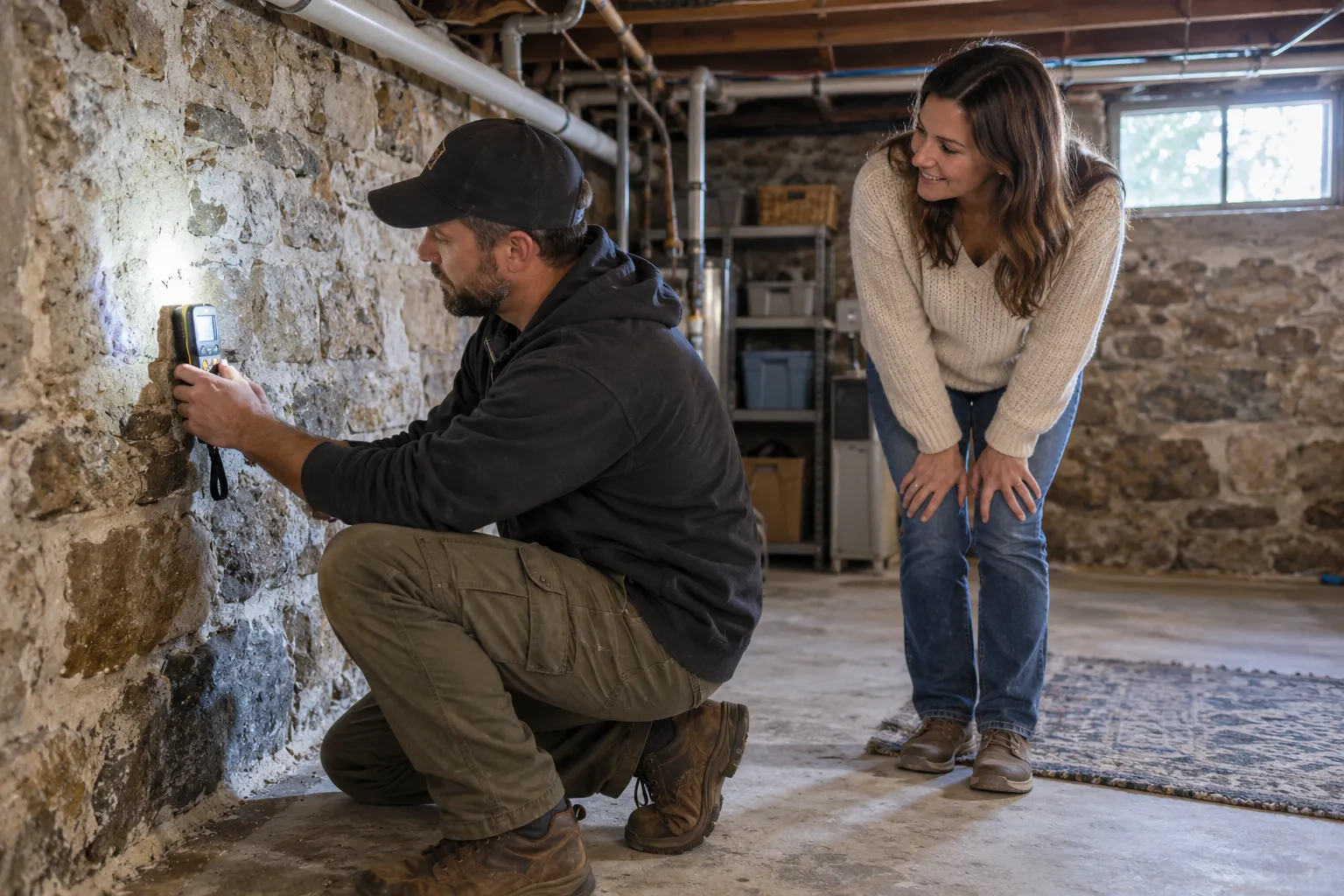
The provider walks the home and asks about leaks, smells and health symptoms. They use a moisture meter to find damp materials. Some use a thermal camera to spot cold, wet areas behind walls.
They check the attic, basement, crawl space and any room with a complaint. Then they explain what they found in plain words and may suggest testing.
Types of Mold Testing
Testing is not always needed. If you can see mold, a sample may not change the plan. Testing helps when mold is hidden or you want a record.
- Air samples capture spores floating in a room and compare them to outdoor air.
- Surface samples use a swab or tape lift on a stain.
- Bulk samples take a small piece of material.
Ask about certified mold testing labs. Samples should go to an accredited lab, not just get a quick glance.
Understanding Your Results
A lab report lists mold types and counts. Indoor levels are compared with outdoor air and with other rooms. Higher indoor counts of the same type point to a problem.
Mold type matters less than moisture and amount. Ask the provider to explain the report in simple terms and to mark the spots that need work.
Inspection and Remediation: Separate or Together?
Some providers do both. Others only inspect. An independent inspector has no stake in selling you cleanup. A provider who does both can move faster.
Either way, get the findings in writing. That lets you compare quotes. If you want black mold removal or residential mold removal later, you already have a clear plan.
How to Prepare for Your Visit
A little prep saves time:
- Clear a path to the basement, attic and closets
- Move stored boxes away from walls
- Note where leaks or smells happen
- Gather old repair or water damage records
- Keep pets in a safe room
Do not clean the suspect area first. Let the provider see it as it is.
Questions to Ask the Provider
Keep a short list handy:
- Do you inspect only, or also remove mold?
- Which lab will you use?
- Will I get a written report?
- How do you find the moisture source?
- What does the estimate include?
A good provider answers plainly. If something sounds vague, ask again.
Your Next Step
Less searching means a smaller problem. Request an estimate and Dukehip Mold Help helps connect you with an independent provider near you.
What's Included
Moisture Mapping
A meter and camera help find damp spots behind walls, floors and ceilings you cannot see.
Visual Home Walkthrough
The provider checks basement, attic and problem rooms for stains, smells and leaks.
Air and Surface Sampling
Samples can be taken when mold is hidden or you want clear proof.
Written Report
Lab results and findings are explained in plain words, so you can plan next steps and compare quotes.
What Mold Inspection Typically Costs
Prices vary by home size, region and how many samples you need. These are typical U.S. ranges only. Always ask for a written quote before work starts.
| Item | Typical range | Notes |
|---|---|---|
| Visual inspection | $200 – $600 | Smaller homes cost less |
| Air sample (each) | $50 – $150 | Plus an outdoor comparison |
| Surface sample | $40 – $100 | Swab or tape lift |
| Lab fees | $40 – $150 | Often per sample |
| Full inspection with testing | $400 – $1,000 | Depends on rooms checked |
| Thermal imaging add-on | $100 – $400 | Helps find hidden moisture |
How It Works
Request an Estimate
Tell us about your home and what you noticed, like smells, stains or past leaks.
Get Connected
Dukehip Mold Help points you to an independent provider in your area.
Provider Inspects Your Home
They check for moisture and visible mold, and may take samples.
Review Findings and Decide Next
Read the report, compare quotes and choose what fits your home.
Why Call Dukehip Mold Help
Less Searching
Skip the endless scrolling. Request an estimate and be pointed toward independent local providers who check homes like yours.
Honest Guidance
Know what to do yourself and where to stop.
Season Smart
Timing tips fit snowmelt, storms and humid summer weather.
No Obligation
Request an estimate and decide later whether to book.
Other Services
Need mold inspection & testing services in Kinnelon?
Request an estimate and tell us what you found. We will point you to an independent local provider. Prefer the phone? Request a callback to check provider availability.
Mold Inspection & Testing Services FAQ
- Do I need mold testing if I can see mold?
- Often not. If mold is visible, testing may not change the plan. The bigger question is why it grew. An inspection finds the moisture source, and sampling helps most when growth is hidden or you want a written record.
- How long does a mold inspection take?
- Most visits take one to a few hours, depending on home size. Lab results usually take several days. Ask the provider for a timeline when you book.
- Does homeowners insurance pay for mold inspection?
- Some policies may cover mold from sudden damage, like a burst pipe, but many exclude slow leaks. Check your policy. Providers can often help document damage for a claim, but coverage depends on your insurer.
Reach a local provider
Request an estimate and tell us what you found. We will point you to an independent local provider. Prefer the phone? Request a callback to check provider availability.
No obligation