Black Mold Removal Services in Kinnelon
Request an estimate today
Dark growth on a wall, ceiling or basement block can feel scary. Stay calm and take a few smart first steps. Black mold removal means finding the growth, sealing off the area, taking out what can't be saved, and cleaning what can. Then the moisture behind it gets fixed so the mold stays gone.
Dukehip Mold Help is a referral service. We connect homeowners in Kinnelon and the Kinnelon area with independent local providers in our network. The provider does the work, not Dukehip Mold Help. You can request an estimate, compare what you hear, and decide at your own pace. Fewer searches mean the problem gets looked at while it is still small.
Found Dark Mold? Start Here
Put the scrub brush down. Rubbing a dark patch can kick spores into the air. Try these steps first:
- Keep kids, pets and anyone with breathing trouble out of the room.
- Close the door and turn off fans that push air around.
- Stop the water if you can. Tighten a fitting, shut a valve, set out a bucket.
- Take photos before anything gets cleaned or moved.
Then request an estimate. A local provider can look at it while the patch is still small.
What People Mean by Black Mold
"Black mold" is a casual name for dark green or black growth. You can't tell the type by color. Only lab testing can do that. So treat any dark growth the same way. It is a moisture problem, and it needs a real plan.
Where It Likes to Hide
Older homes give mold plenty of cool, damp corners. Check these spots with a flashlight:
- Stone and block basement walls, low down near the floor
- Behind paneling, stored boxes and furniture pushed against outside walls
- Knee walls and eaves in Cape Cod style attics
- Under sinks, behind toilets and around tub caulk
- Window frames that sweat all winter
- Shared walls and bath fans in multi-family buildings
A musty smell with no visible patch is a clue too. Mold often grows out of sight first.
How the Seasons Set the Clock
Winter brings condensation. Warm indoor air hits cold walls and leaves them wet. Ice dams can push meltwater into attic edges.
Spring snowmelt is the big one for basements. Water leans on block and stone walls, then seeps through. Check for damp floors and white chalky streaks after a thaw.
Summer humidity keeps cellars clammy. Fall coastal storms and clogged gutters send water where it shouldn't go. Time your checks to the weather, and dry things before the next wet spell.
Why Bleach Usually Isn't Enough
Bleach can lighten a stain on a hard surface. On drywall, wood and insulation, it often soaks only the top layer. The roots stay behind, and the patch comes back.
Also, never mix bleach with ammonia or other cleaners. The fumes are dangerous.
What You Can Safely Do Yourself
Dry it first. Run a dehumidifier and open a window if the air is dry outside. Then, for a small spot on a hard surface like tile or sealed metal:
- Wear an N95 mask, gloves and goggles.
- Wipe with detergent and water. Don't spray dry dust around.
- Bag the rags and wash your hands.
- Seal and dry the area, then watch it for a few weeks.
Know Where to Stop
Stop and call in a provider when:
- The patch is bigger than about a hand-sized area, or keeps spreading
- It is on drywall, carpet, insulation or framing
- It returns after you clean it
- It follows sewage or flood water
- It may be near your heating and cooling ducts
- Someone at home has asthma, allergies or a weak immune system
Request a callback to check provider availability, or use the form to request an estimate.
How Black Mold Removal Works
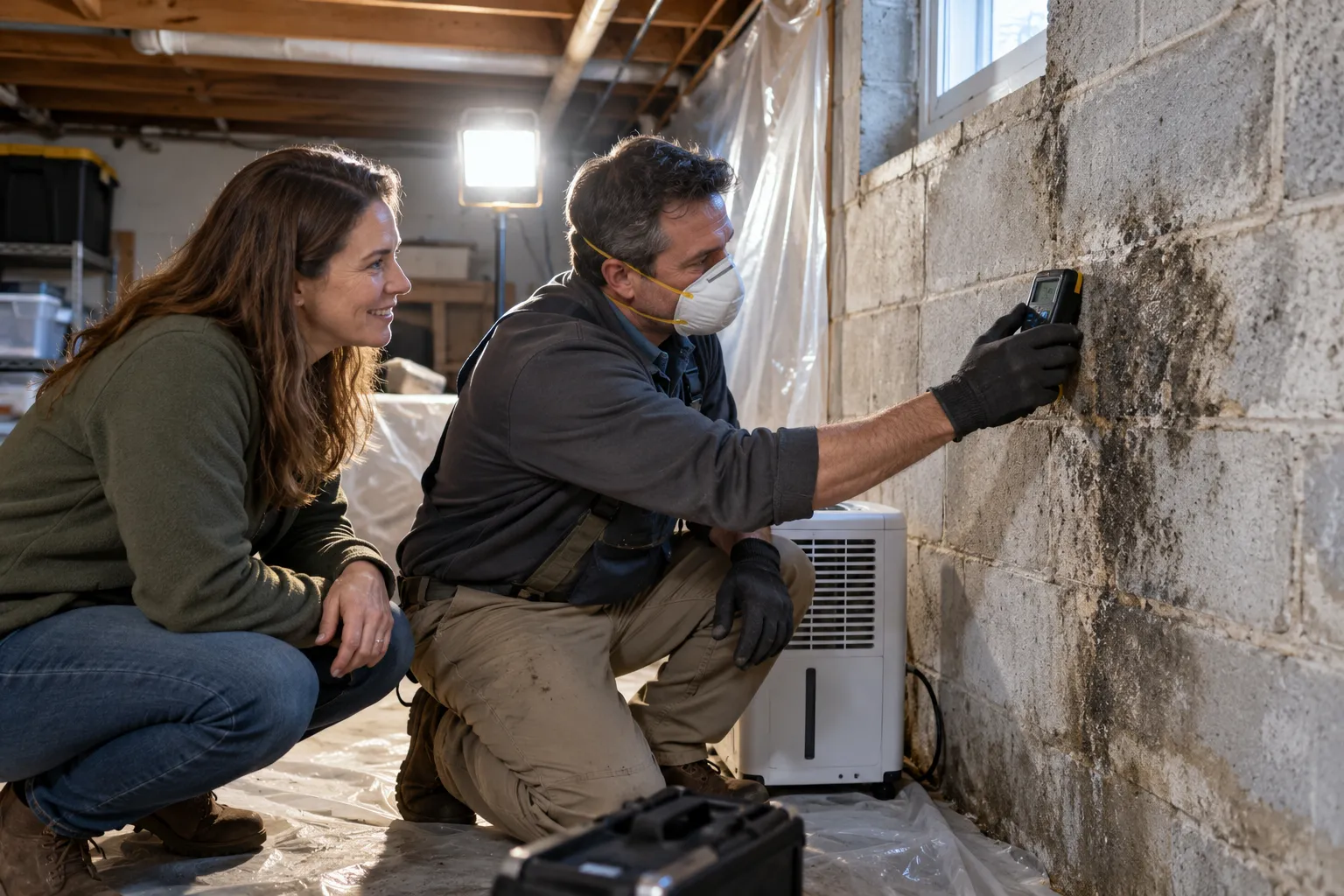
The steps vary by job, but a typical plan goes like this. A provider looks over the damage and finds the moisture source. Plastic barriers seal the work area, and a negative air machine with HEPA filters keeps spores from drifting. Soaked porous materials get cut out and bagged. Hard surfaces get scrubbed and vacuumed with HEPA tools. Then everything is dried and checked.
Fixing the Moisture Behind It
Fix the moisture. Cleaning without this step is just a short pause. Common repairs include:
- Regrading soil and extending downspouts away from the house
- Sealing cracks in block or stone walls
- Adding a sump pump or interior drainage
- Venting bath fans and dryers outdoors
- Adding attic insulation and air sealing to stop winter condensation
- Keeping indoor humidity roughly between 30 and 50 percent
Some providers handle repairs. Others point you to a trade. Ask which.
What About Your Belongings?
Hard items like glass, metal and sealed plastic usually clean up well. Porous items such as mattresses, stuffed toys and soaked cardboard are often tossed. Photos and papers need care, so ask the provider. Take pictures before you throw anything away. Providers can often help document damage for a claim. Some policies may cover sudden damage, so check your policy.
Questions to Ask the Provider
Get the answers in writing when you can:
- Will you test before and after, and who pays for lab work?
- What is the exact work area, and how will you contain it?
- Which materials will come out?
- How will the moisture source be found and handled?
- Are you licensed and insured where I live?
- What does the written quote include and leave out?
Less Searching, Smaller Problem
We built Dukehip Mold Help so you don't have to dig through pages of listings. Tell us about the problem, and we connect you with an independent provider in our network. Request a callback to talk it through at your pace.
Plan Ahead for the Next Season
Walk the house each fall and spring. Clear gutters, check the basement after thaws, and test your bath fans. Small habits like these make residential mold removal a rare job instead of a yearly one.
What's Included
Look-Over of the Damage
A provider checks where growth is, how far it spreads, and what feeds it.
Contained Work Area
Plastic barriers and HEPA air filters help keep spores from drifting into the rest of the home.
Careful Removal
Soaked, porous materials come out. Hard surfaces get scrubbed and vacuumed.
Drying and Recheck
Dry-out gear runs until readings look normal. Some providers retest the area afterward.
What Black Mold Removal Typically Costs
Prices depend on the size of the area, the materials involved, and how hard the space is to reach. These are typical U.S. ranges. Always get a written quote before work starts.
| Item | Typical range | Notes |
|---|---|---|
| Small contained patch | $500 – $1,500 | One wall or corner, easy access |
| Single room | $1,500 – $4,000 | Drywall removal raises the total |
| Basement or crawl space | $2,500 – $7,500 | Block walls and damp floors add time |
| Widespread whole-home job | $10,000 – $30,000 | Several rooms or ductwork involved |
| Mold testing with lab samples | $250 – $800 | Price rises with the number of samples |
| Moisture and drainage repair | $300 – $5,000 | Gutters are cheap; waterproofing costs more |
How It Works
Request an Estimate
Tell us where the dark growth is, how big it looks, and whether water is still coming in.
Get Connected Locally
We connect you with an independent provider in our network who serves your area.
Review the Written Quote
The provider looks over the damage and explains the scope, price and timing.
Provider Does the Work
The provider contains, removes, cleans and dries, then you fix the moisture source.
Why Call Dukehip Mold Help
Less Time Searching
One request reaches an independent provider in our network, so you skip the endless listings.
Local Know-How
Providers know how snowmelt, humid summers and older foundations affect homes in your area.
Honest Guidance
We tell you what is safe to do yourself and where a pro should step in.
No Pressure
Request an estimate, compare what you hear, and decide at your own pace with no obligation.
Other Services
Need black mold removal services in Kinnelon?
Request an estimate and tell us what you found. We will point you to an independent local provider. Prefer the phone? Request a callback to check provider availability.
Black Mold Removal Services FAQ
- Can I remove black mold myself?
- Only a small spot on a hard surface, like tile. Wear an N95 mask, gloves and goggles, and wipe with detergent and water. Larger patches or growth on drywall, wood or carpet need a provider.
- Is black mold dangerous to my health?
- Mold can bother people with asthma, allergies or weak immune systems, and may irritate anyone. Color doesn't show the type. Keep sensitive people away, dry the area, and talk to a doctor if symptoms linger.
- Will the mold come back after removal?
- It can if the moisture stays. Leaks, damp block walls and poor venting feed it. Ask the provider to find the source, and fix the moisture so the clean area stays dry.
Reach a local provider
Request an estimate and tell us what you found. We will point you to an independent local provider. Prefer the phone? Request a callback to check provider availability.
No obligation